
LED strip light quality for cabinets
LED strip light quality for cabinets means how well cabinet LED strips produce usable light for visibility, comfort, and appearance. It is shaped by brightness, color temperature, dimming, diffusion, glare control, hotspots, and the way visible output reaches the cabinet surface.
For task lighting, brightness affects how clearly a work area or shelf can be seen. For ambient lighting, color temperature and diffusion often matter more because warm white, neutral white, cool white, beam softness, and glare can change the room effect. Dimming can make the same under-cabinet light feel more comfortable, but the result depends on strip type, controller behavior, diffuser use, cabinet distance, room lighting, and user preference.
The practical choice is not one fixed strip or one fixed white tone. Cabinet LED strips should be judged by whether they create usable light without harsh glare, distracting hotspots, unstable dimming, or a white appearance that conflicts with the cabinet purpose.
Light quality is the main focus here; installation, power planning, and broad décor placement are adjacent decisions.
What light quality means for cabinet LED strips
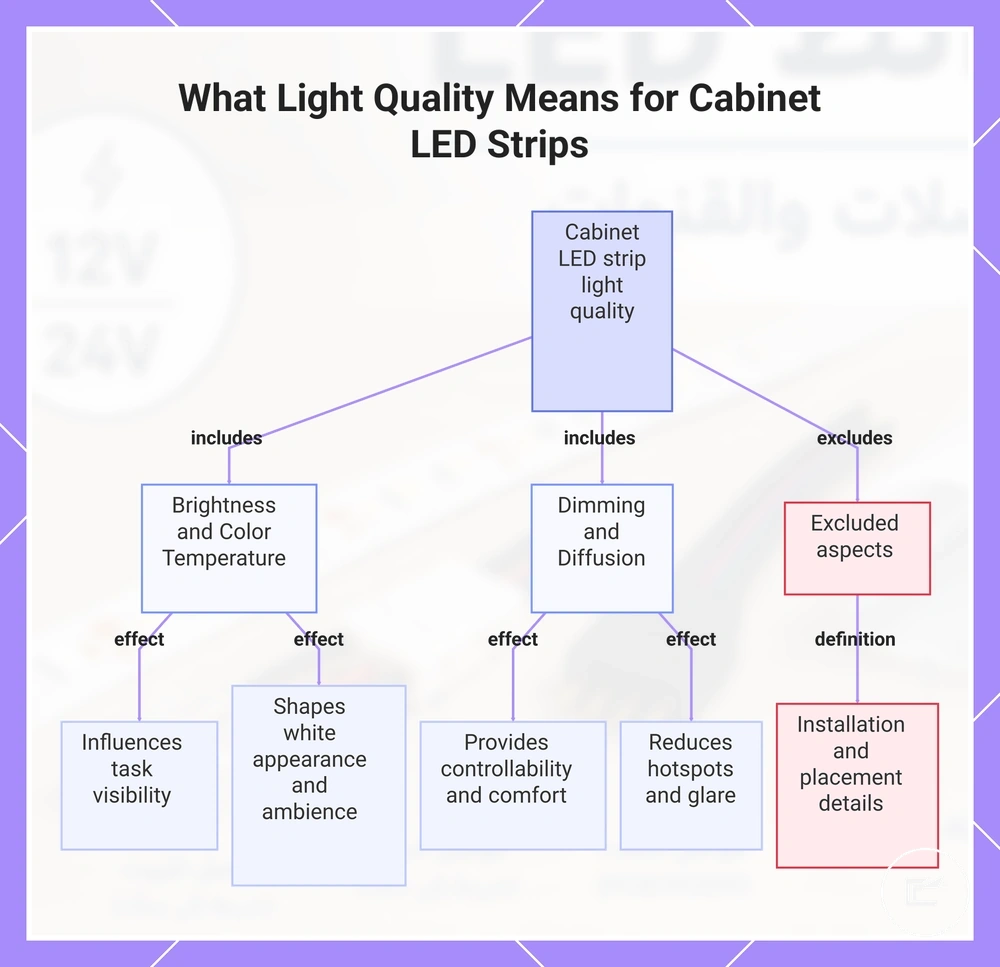
Cabinet LED strip light quality is the combined effect of brightness, color appearance, controllability, and beam softness. It describes how cabinet LED strips look and perform within a cabinet environment, not just how much light they produce. The four main attributes are brightness, color temperature, dimming, and diffusion.
Brightness influences task visibility and can affect the balance between usable light, glare, and shadows. Color temperature shapes white appearance and ambience, while dimming provides controllability that may improve comfort depending on cabinet location, surface reflectivity, and strip setup. Diffusion affects beam softness and can reduce visible hotspots when paired with suitable accessories. Within home LED strip and cabinet lighting accessories, light quality refers to the character of the light itself rather than installation method, power planning, or placement choices.
Cabinet LED strip light quality is easiest to read by separating brightness, color, dimming, and diffusion:
- Brightness: Influences task visibility and the strength of visible output.
- Color temperature: Affects white appearance and the perceived ambience of the cabinet area.
- Dimming: Provides controllability and can support visual comfort as lighting needs change.
- Diffusion: Improves beam softness and may reduce glare, shadows, and hotspots depending on the setup.
This chart shows the four main attributes of cabinet LED strip light quality and their key effects, along with what light quality excludes.
Brightness levels for task and ambient cabinet lighting
Task cabinet lighting usually benefits from a higher brightness level because visibility is the primary goal, while ambient lighting often uses softer light output to create a more subtle effect. The same LED strip can produce different results depending on cabinet purpose, cabinet surface reflectivity, distance, and diffuser use. A suitable brightness level depends on whether the cabinet is intended for task lighting, display lighting, accent lighting, or ambient lighting.
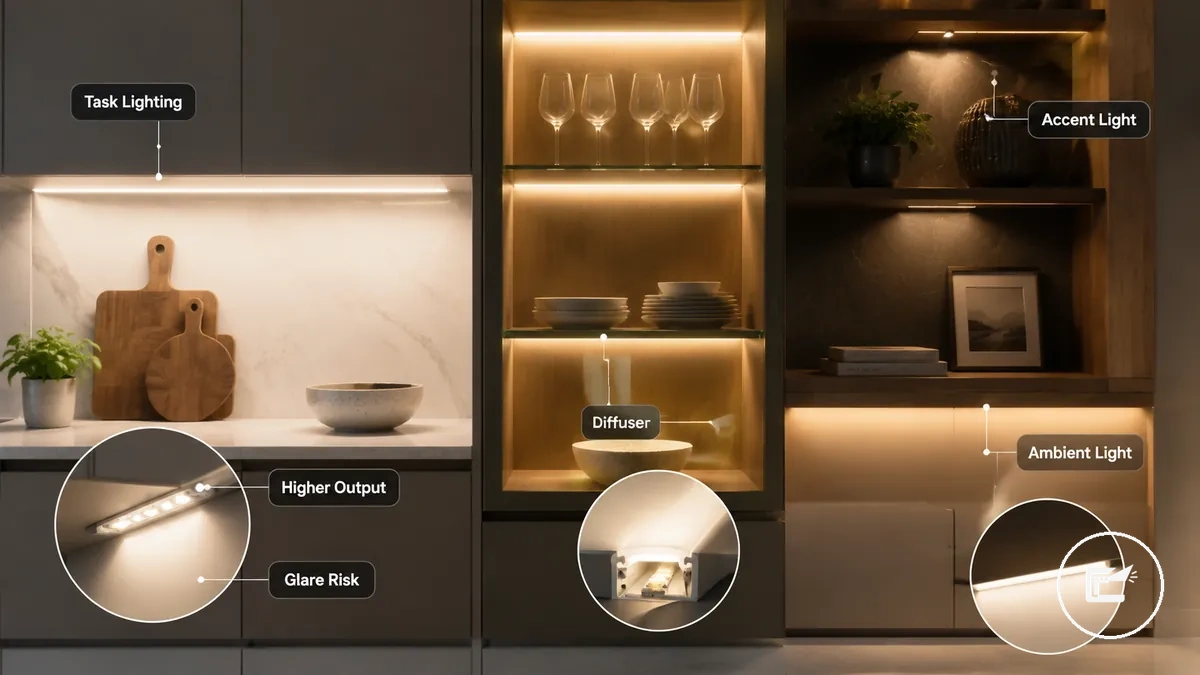
Higher light output can increase visibility for worktop lighting and detailed cabinet tasks. Glare risk may also increase when strip density is high, the viewing distance is short, or reflective cabinet surfaces concentrate the light. Lumens provide a general indication of output, but usable brightness depends on factors such as strip density, diffuser selection, distance, room lighting, and cabinet design. For this reason, brightness decisions are usually more effective when matched to the intended cabinet use-case.
Brightness levels for task and ambient cabinet lighting depend on purpose and the distance between the LED strip and the cabinet surface. For many under cabinet lighting use situations, task visibility requires a different brightness tendency than accent or ambient effects.
| Cabinet use | Brightness tendency | Main risk | Decision cue |
|---|---|---|---|
| Task lighting | Higher brightness level | Glare | Prioritize visibility while managing glare through distance and diffuser use |
| Display lighting | Moderate brightness level | Uneven emphasis | Balance object visibility with viewing comfort |
| Accent lighting | Lower to moderate brightness level | Visible hotspots | Focus on highlighting rather than maximum output |
| Ambient lighting | Softer brightness level | Light may appear too subtle for the space | Match output to surrounding room lighting |
A kitchen worktop often benefits from stronger usable brightness because tasks require clearer visibility. Display cabinets may benefit from balanced light output that draws attention without creating distracting reflections. Indirect cabinet accents usually emphasize softness and comfort, where diffuser choice and distance can influence the final effect as much as the brightness level itself.
Lumens per foot and usable cabinet brightness
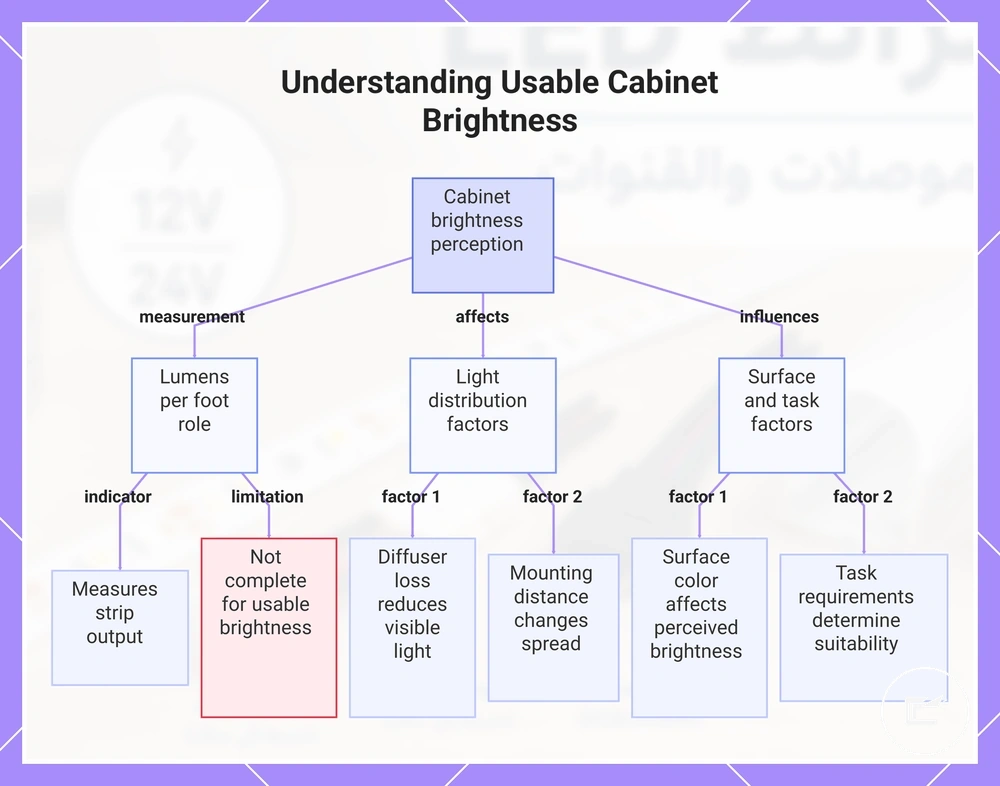
Lumens per foot is a useful brightness selection signal because it measures strip output, but it is not a complete measure of usable brightness inside a cabinet. Two LED strips with similar lumens per foot can create different perceived brightness depending on strip density, mounting distance, diffuser loss, and surface color. As a result, perceived brightness depends on conditions rather than the brightness rating alone.
Lumens per foot helps compare light output, but usable brightness and glare are influenced by additional factors. The following conditions can change how cabinet light is perceived:
- Diffuser loss may reduce visible light output while improving light distribution.
- Mounting distance can affect how concentrated or spread the light appears on the cabinet surface.
- Surface color and reflection can influence perceived brightness and glare.
- Strip density may affect light uniformity and hotspot visibility.
- Task requirements help determine whether a brightness level feels suitable for the intended use.
This chart explains why lumens per foot alone does not determine usable cabinet brightness and lists the main influencing factors.
High brightness strips, density, and glare control
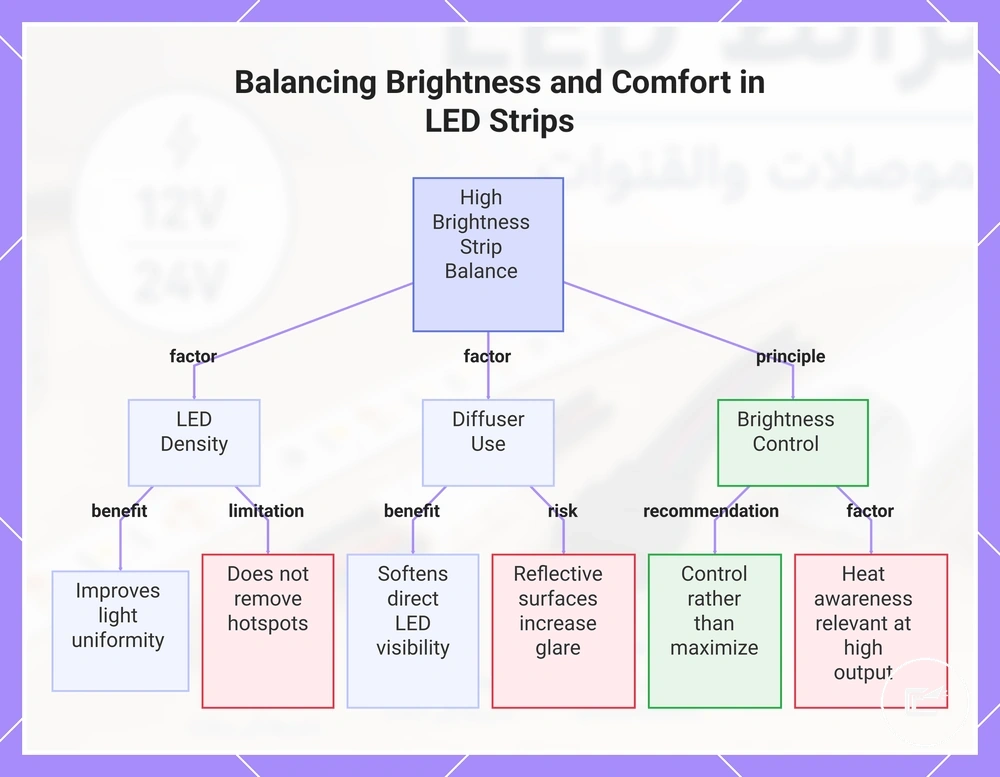
A high brightness LED strip can improve task visibility when cabinet lighting requires stronger light output, but higher output may also increase glare and visible hotspots. The balance between brightness and comfort depends on factors such as LED density, diffuser use, and how the light reaches the cabinet surface. A high output strip is most effective when brightness is controlled rather than maximized.
LED density can help create a more uniform light pattern and reduce visible dotting, but it does not automatically remove hotspots or glare. A diffuser can soften light from an exposed strip and may reduce discomfort caused by direct LED visibility. Heat awareness can also become more relevant as output increases, although the effect depends on strip design and operating conditions. Glare and hotspot risk may remain higher when a bright strip is mounted near reflective surfaces or used without suitable diffusion.
This chart shows the key factors and principle for balancing brightness and comfort when using high brightness LED strips, including density, diffuser use, and brightness control.
Color temperature choices for cabinet and kitchen lighting
Color temperature defines the white tone produced by cabinet lighting and influences how cabinet surfaces, countertops, and surrounding spaces appear. Measured in Kelvin, color temperature affects perceived warmth, task clarity, and ambience. In kitchen lighting and cabinet applications, the most suitable choice depends on material color, wall color, task type, and personal preference.
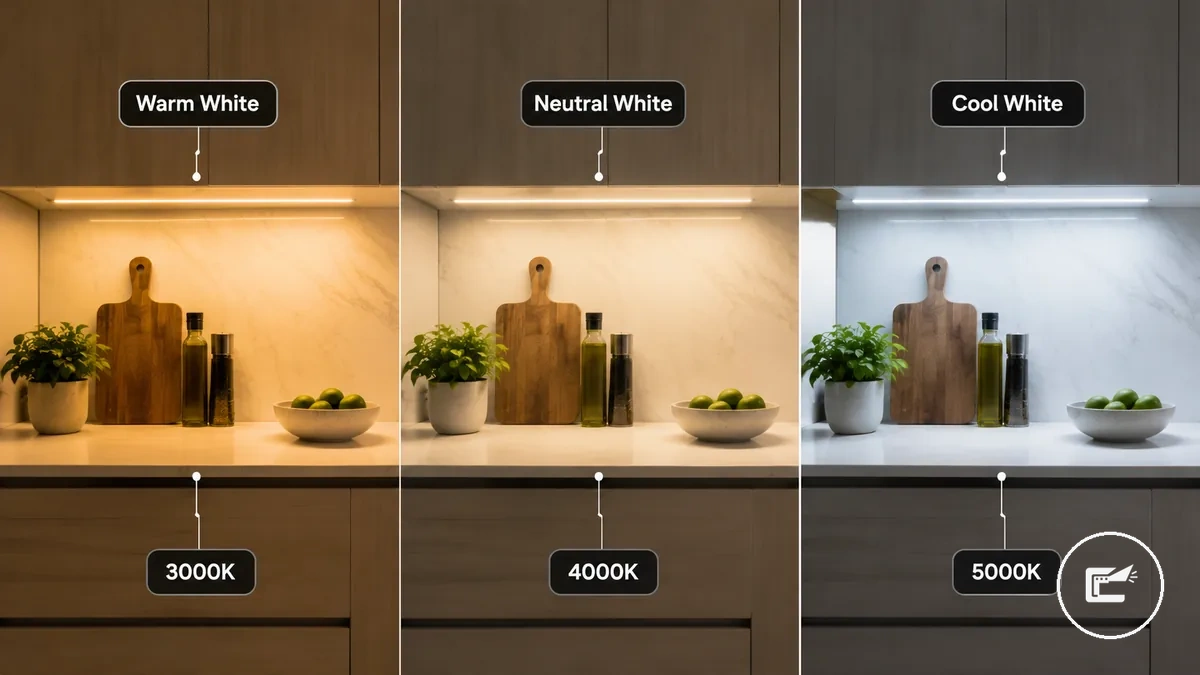
Warm white, neutral white, and cool white create different visual effects. Warm white may support a softer appearance that suits display cabinets or evening lighting. Neutral white often balances light warmth and light clarity across a cabinet surface. Cool white can make countertop details appear clearer in task-focused kitchen lighting, although the preferred result varies by use case and room finish.
Color temperature choices for cabinet and kitchen lighting are easier to evaluate when Kelvin ranges are compared directly. The table below shows how common color temperature options can influence cabinet appearance and room perception.
| Kelvin range | White appearance | Cabinet effect | Best-fit use-case |
|---|---|---|---|
| 3000K | Warm white | Creates a softer cabinet surface appearance and warmer ambience | May suit display cabinets and softer evening lighting |
| 4000K | Neutral white | Balances color appearance and light clarity | May suit general kitchen lighting and mixed-use cabinet areas |
| 5000K | Cool white | Emphasizes visual clarity on cabinet and countertop surfaces | May suit kitchen work areas and task-focused spaces |
For example, warm-toned cabinet materials may appear more comfortable under warm white lighting, while task-oriented work areas may benefit from a cooler white tone. Users seeking indoor ambience with cabinet lighting often prefer a softer white appearance during evening use, although the final effect depends on surrounding colors and lighting conditions.
Warm white, neutral white, and cool white effects
Warm white, neutral white, and cool white differ in how they influence cabinet surfaces, task clarity, and ambience. Warm white creates a softer appearance, neutral white offers a balanced white tone for cabinet work, and cool white emphasizes visual clarity. The most suitable option depends on cabinet finish, room lighting, and the intended use of the space.
White tone differences are easier to compare within a cabinet lighting context.
| White tone | Visual effect | Cabinet fit |
|---|---|---|
| Warm white | Softer appearance with a stronger ambience effect | May suit display cabinets and relaxed evening use |
| Neutral white | Balanced white appearance with moderate task clarity | May suit mixed-use cabinet areas and everyday cabinet work |
| Cool white | Higher perceived clarity with a more daylight-like white tone | May suit task-focused cabinet surfaces, although glare risk can depend on surface finish and lighting conditions |
Cabinet-context trade-offs remain important because the same white tone can appear different across materials and room conditions. Warm white may support a more comfortable visual atmosphere, while neutral white often balances ambience and usability. Cool white can improve the perception of detail, but it is not automatically superior for every food-prep area. Preference often depends on cabinet color, room lighting, and task needs.
3000K, 4000K, and 5000K cabinet lighting decisions
3000K, 4000K, and 5000K serve as cabinet lighting decision anchors because each Kelvin value represents a different balance of warmth, neutrality, and clarity. A cabinet LED strip at 3000K is generally warm, 4000K is generally neutral, and 5000K is generally cool. These Kelvin values help guide cabinet lighting decisions, but the final result also depends on cabinet materials, lighting goals, and room conditions.
Kelvin values are most useful when treated as selection criteria rather than fixed rules.
| Kelvin value | Typical appearance | Useful cabinet context | Watch point |
|---|---|---|---|
| 3000K | Warm | May suit ambience-focused cabinet lighting and softer visual settings | Surface color and room lighting can influence the final appearance |
| 4000K | Neutral | May suit balanced cabinet lighting where task visibility and comfort are both important | Color appearance can vary with strip quality and surrounding finishes |
| 5000K | Cool | May suit cabinet areas where visual clarity is a higher priority | Higher clarity does not automatically mean better suitability for every cabinet application |
A cabinet lighting decision should consider more than the Kelvin value alone. CRI, strip quality, and surface color can affect color appearance and how cabinet finishes are perceived. A warm, neutral, or cool white temperature may look different across materials and reflective surfaces. For this reason, Kelvin values are usually most effective as decision guides rather than fixed predictors of task comfort, ambience, or surface appearance.
Tunable white strips for changing cabinet lighting needs
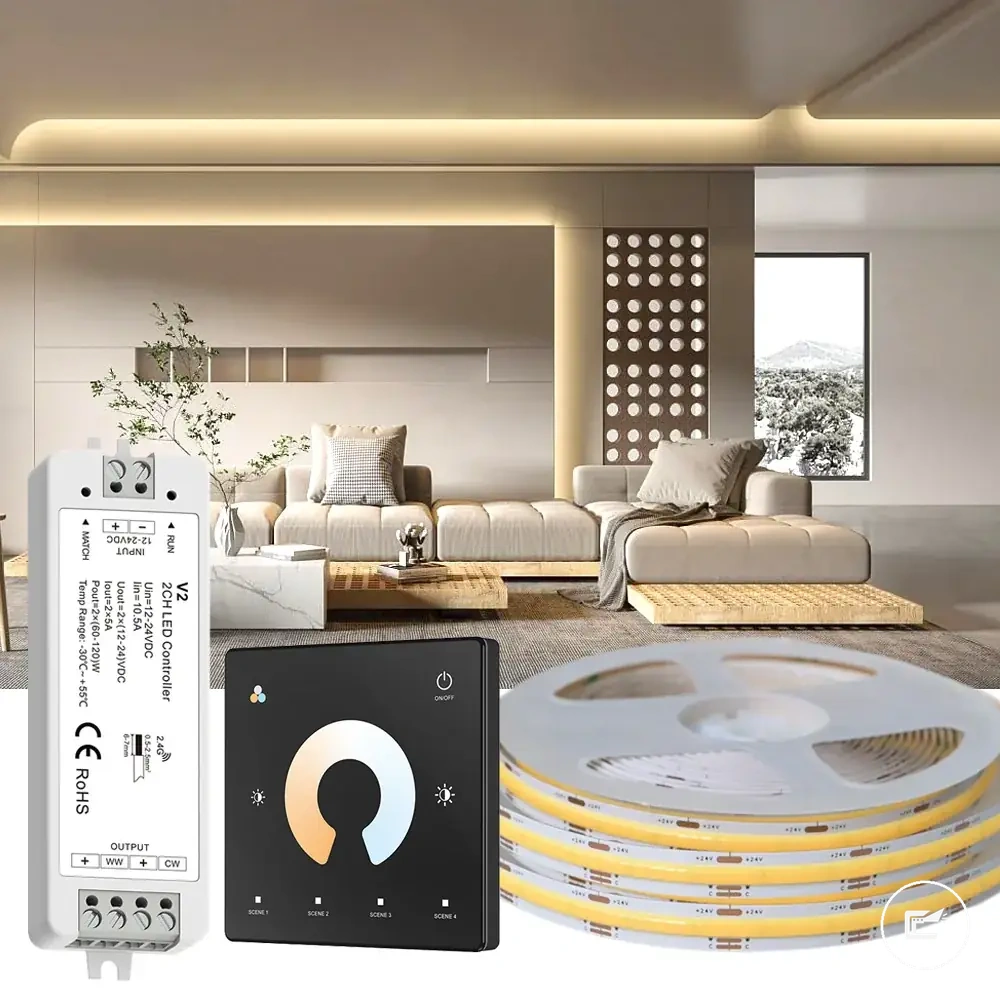
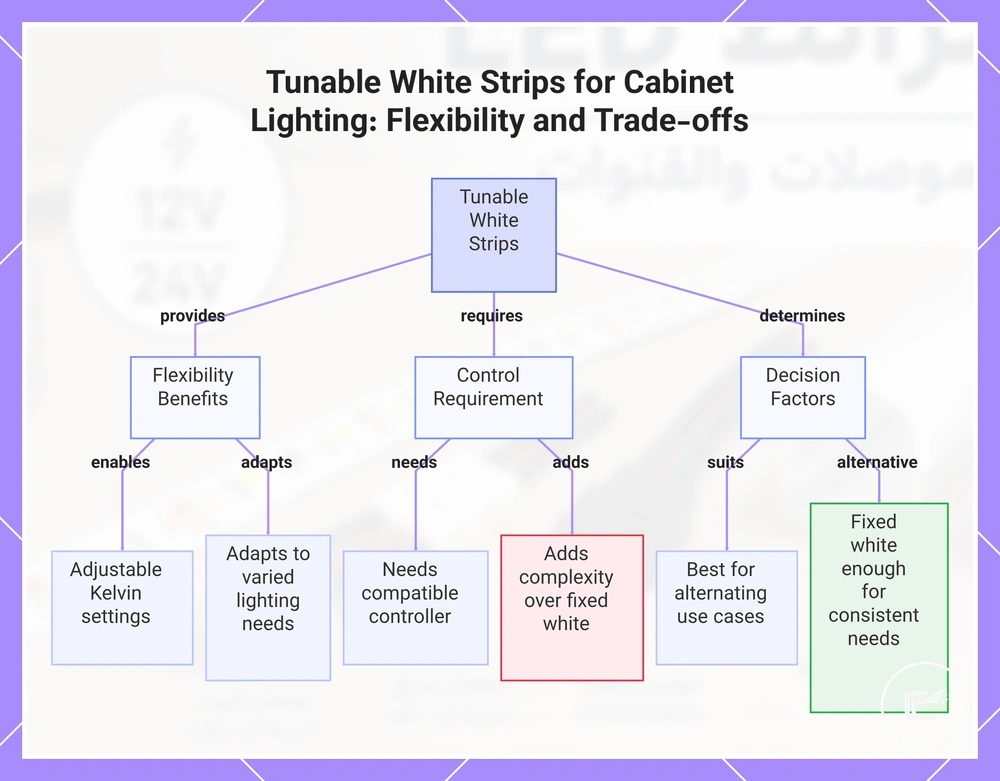
A tunable white strip is most useful when cabinet lighting needs shift between task lighting, evening lighting, and display lighting. By using adjustable Kelvin settings through a compatible controller, the same cabinet lighting system can adapt to different lighting conditions without changing the strip itself. The value of this flexibility depends on how often cabinet use and lighting preferences vary.
Adjustable Kelvin capability can add value when a cabinet serves multiple functions throughout the day. A tunable white strip may support clearer task lighting during active use and a different white temperature for evening lighting or display lighting. However, a fixed white option may be enough when lighting requirements remain consistent. The selection decision often depends on whether the added flexibility justifies the need for controller support.
The main trade-offs are easier to compare at a glance:
- Flexibility: A tunable white strip can adjust white temperature for different cabinet lighting scenarios.
- Control requirement: Adjustable Kelvin operation typically depends on a compatible controller.
- Complexity signal: A selectable white setup may be more involved than a fixed white configuration.
- Use-case fit: It may suit cabinets that alternate between task lighting, evening lighting, and display lighting.
- When fixed white is enough: A fixed white strip can be a simpler setup when cabinet lighting needs rarely change.
This chart shows the key benefits, control requirements, and decision factors for choosing tunable white strips over fixed white strips in cabinet lighting.
Dimming and control options for usable cabinet light
Dimming and control options influence how usable cabinet LED strips remain throughout daily activities after brightness and color have been chosen. A lighting level that supports task work may feel too bright during evening use, while a lower setting may be more comfortable when full visibility is not required. Dimming allows brightness control to adapt to changing cabinet lighting needs without changing the light source.
Dimming quality depends on compatibility between the strip type, dimmer, controller, and related components. A mismatch between the cabinet LED strip and the control system may affect smooth adjustment or increase the possibility of flicker under certain operating conditions. Manual dimmers, remote control systems, and smart control options can provide different levels of convenience, but control quality depends on compatibility and stable operation rather than the control method alone. Smooth adjustment may also vary by controller behavior, load conditions, and power stability.
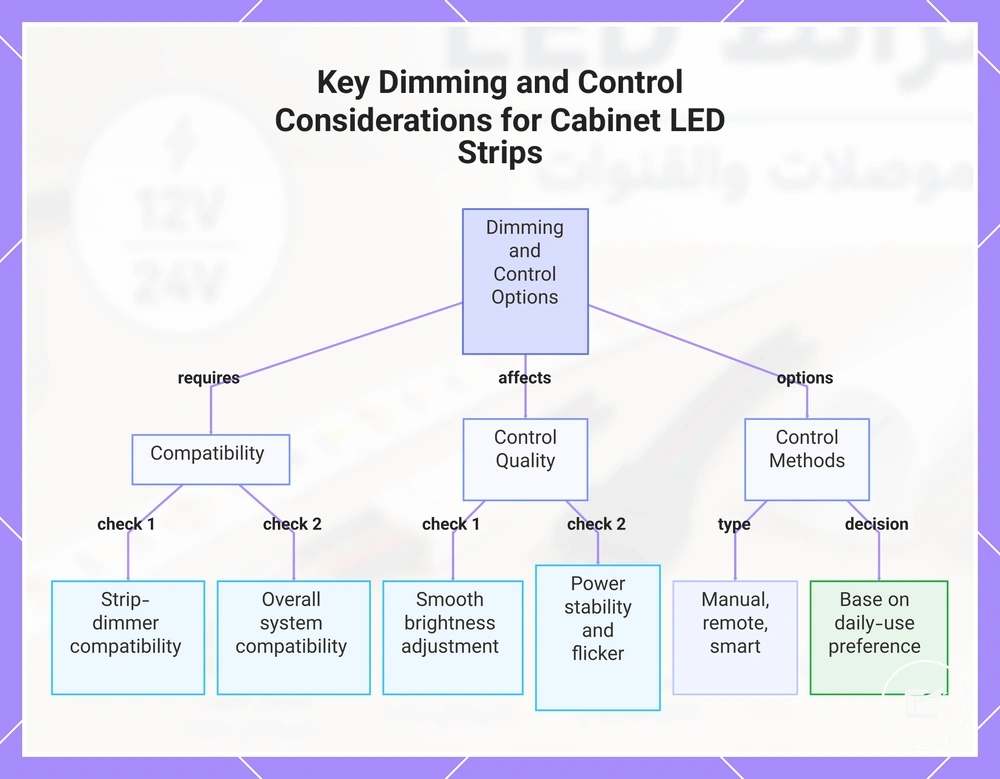
The following checklist highlights the most important control considerations for cabinet LED strips:
- Verify that the strip type is compatible with the selected dimmer or LED controller.
- Check whether brightness control remains smooth across the intended adjustment range.
- Consider whether power stability and operating conditions may influence visible flicker.
- Choose between manual control, remote control, or smart control based on daily-use preference.
- Confirm that the controller supports the intended lighting behavior and adjustment needs.
- Review overall compatibility between the cabinet LED strip, dimmer, controller, and related components.
Dimming can improve comfort and daily-use convenience, but the final experience depends on compatibility, control quality, and the way the cabinet lighting system is used.
This chart outlines the main compatibility, quality, and method factors for selecting dimming and control options for cabinet LED strips.
Dimmable LED strip kits and compatible cabinet dimmers
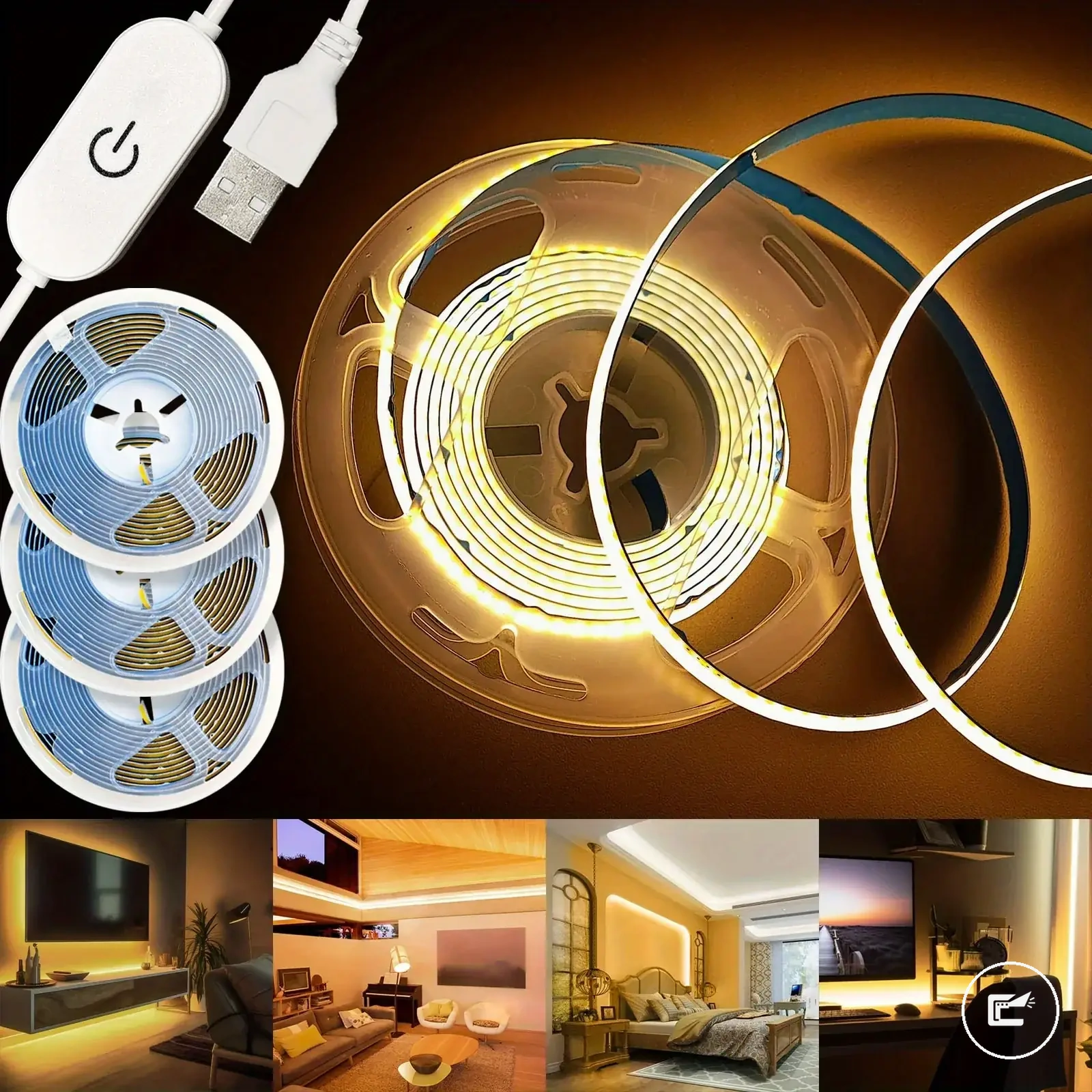
Dimmable LED strip kit performance depends on compatibility between the strip, driver or power supply, controller, and cabinet dimmer. Smooth dimming may be possible when these components are matched correctly, while a mismatch can increase the risk of flicker or limited adjustment quality. Compatibility is the main condition that determines how effectively a dimmable kit responds to brightness changes.
Use the following compatibility checklist before expecting consistent dimming behavior:
- Verify that the voltage of the dimmable LED strip kit matches the supporting components.
- Check whether the driver or power supply supports the intended dimming function.
- Confirm that the controller type is compatible with both the dimmable LED strip kit and cabinet dimmer.
- Review the cabinet dimmer rating to determine whether it aligns with the connected load requirements.
- Avoid assuming that non-dimmable adapters or components will provide smooth dimming with a dimmable kit.
When voltage, controller type, driver or power supply, and dimmer rating are aligned, smooth dimming may be more consistent. When compatibility is limited, flicker or uneven adjustment can become more noticeable under certain operating conditions.
Brightness adjustment without flicker or uneven output
Brightness adjustment improves cabinet lighting comfort when dimming changes occur smoothly without flicker or uneven output. Poor adjustment quality can create visible distraction during everyday use, while a stable dimming range may provide more consistent light transitions. Controller quality, load range, power stability, and strip compatibility all influence how smoothly brightness changes are perceived.
When brightness adjustment appears inconsistent, the symptoms can help indicate which dimming conditions may be affecting performance. The following signs often point to compatibility or stability concerns within the dimming setup:
- Flicker: May suggest limitations related to controller quality, load range, power stability, or strip compatibility.
- Stepping: Brightness changes occur in noticeable increments, which can indicate restricted dimming range or control behavior.
- Buzzing: May occur under certain dimming conditions and can suggest that control components are not interacting smoothly.
- Uneven output: Light intensity may appear inconsistent across the dimming range, which can indicate compatibility or stability concerns.
- Unstable dimming: Brightness may fluctuate unexpectedly, potentially indicating power stability or controller-related conditions.
Visible flicker is not necessarily caused by a brightness setting alone. In many cases, flicker or uneven output may indicate compatibility, power stability, controller quality, or load-range conditions that affect dimming performance rather than the selected brightness level itself.
Diffusion and strip type effects on visible light quality
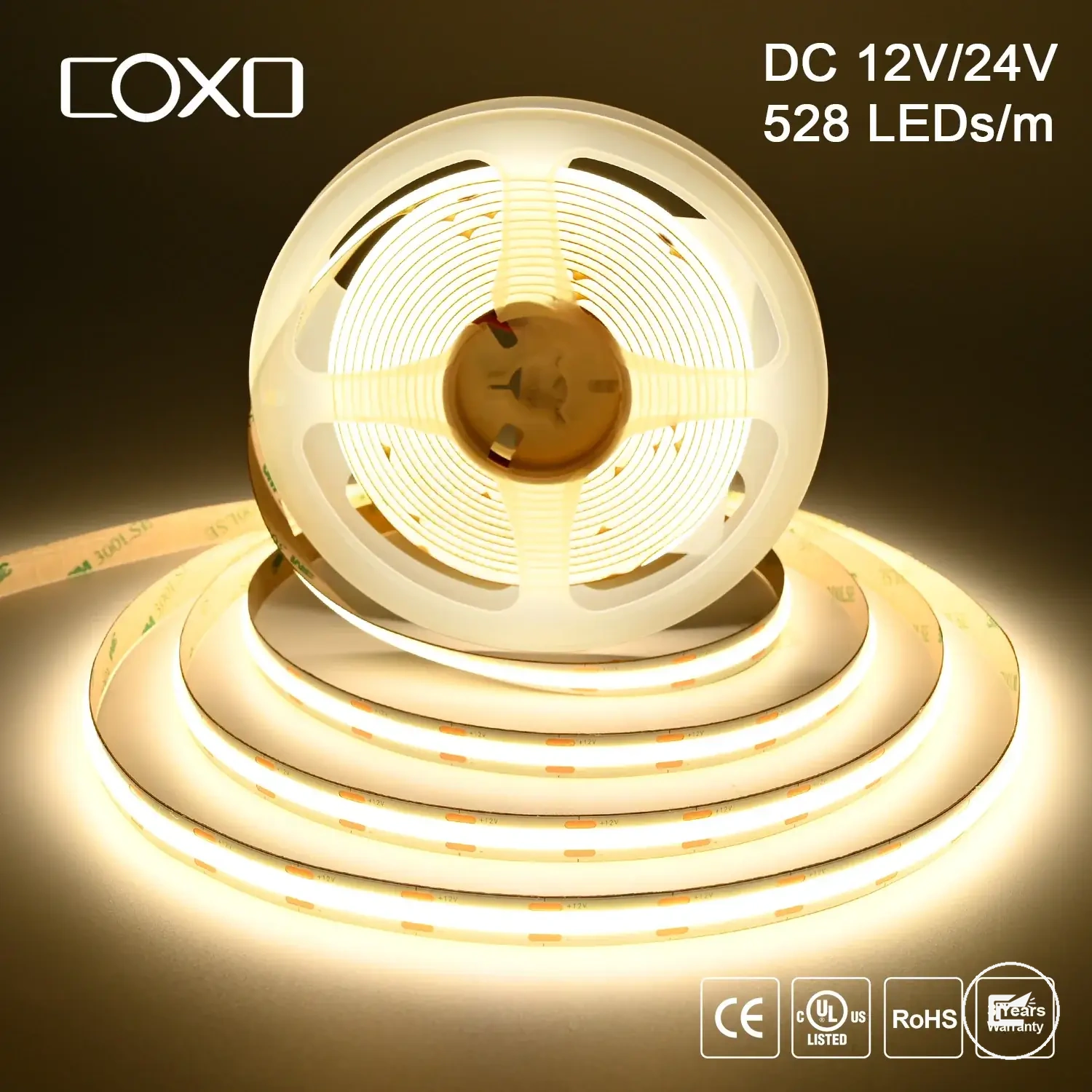
Diffusion and strip type effects on visible light quality determine how cabinet lighting appears on a cabinet surface by influencing visible dotting, hotspots, beam softness, and light distribution. A regular LED strip, COB LED strip, or diffuser channel can produce noticeably different visual results even when brightness levels are similar. The comparison image clarifies how strip construction, diode spacing, light spreading, and surface reflection can change visible output.
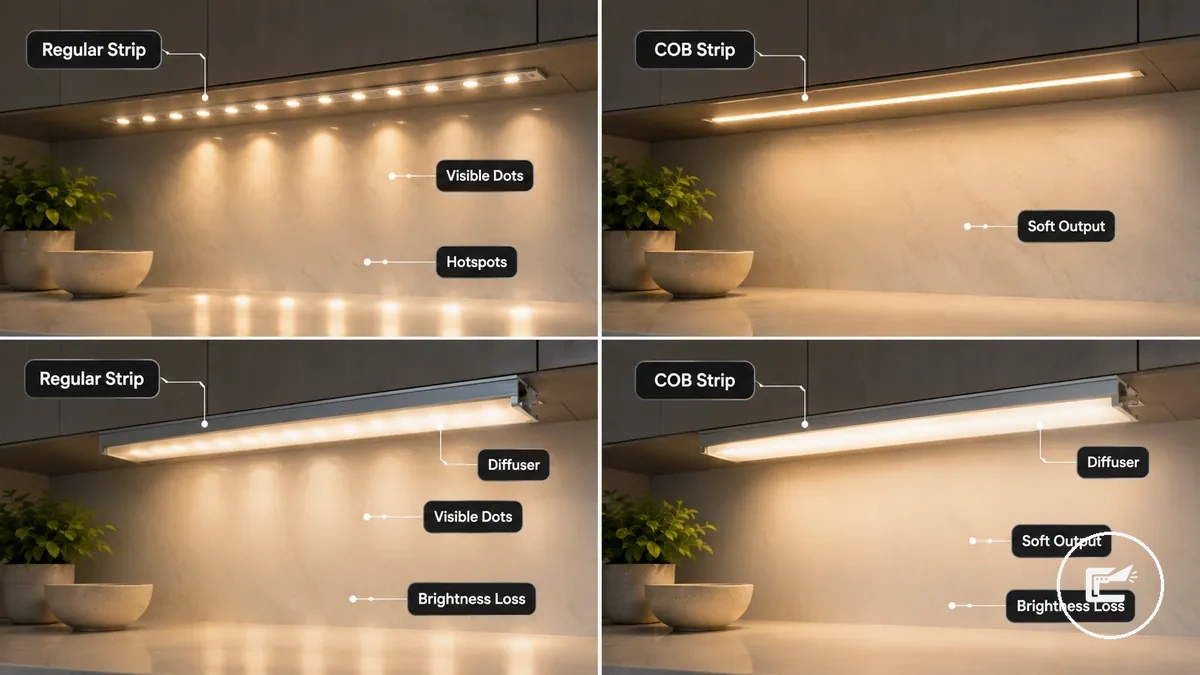
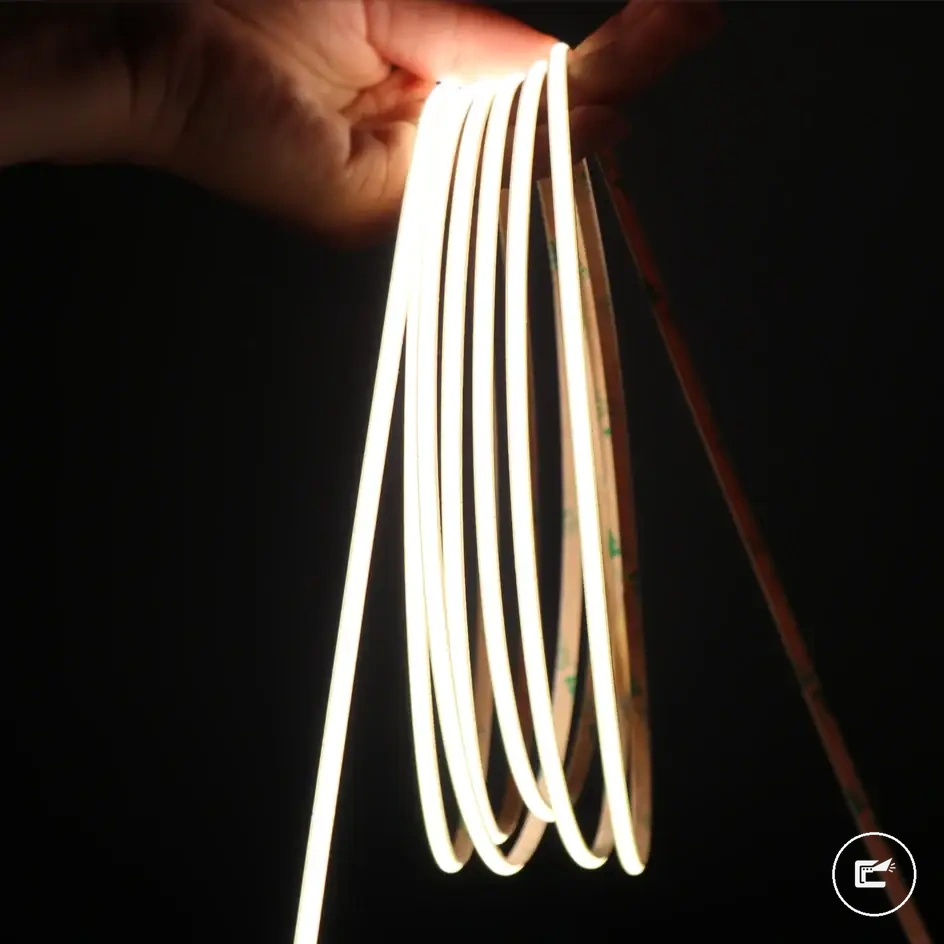
Visible dotting is usually more noticeable when diode spacing is easier to distinguish on a cabinet surface. A COB LED strip often creates a more continuous-looking light line because the light-emitting surface appears more uniform. Diffusion can reduce dot visibility and soften hotspots, although the effect depends on diffuser channel depth, diffuser opacity, strip density, and viewing distance. A diffuser channel may also introduce brightness loss as light passes through a diffused cover.
Diffusion and strip type effects on visible light quality are easier to compare when strip construction and light spreading are viewed together. The table below outlines how different combinations can influence hotspot visibility, softness, and cabinet surface appearance.
| Option | Visible effect | Trade-off | Best cabinet context |
|---|---|---|---|
| Bare regular LED strip | More visible dotting and hotspot visibility | Light points may be easier to see on reflective cabinet surfaces | When direct visibility is limited or diffusion is not a priority |
| COB LED strip | More continuous-looking light with reduced dot visibility | Visual results still depend on distance and surface reflection | Cabinets where smoother light appearance is preferred |
| Regular LED strip with diffuser channel | Reduced visible dotting and increased beam softness | May introduce brightness loss depending on diffuser opacity | Cabinet surfaces where softer output and hotspot control are important |
| COB LED strip with diffuser channel | Soft output with reduced hotspot visibility | Softness and brightness loss depend on channel depth and diffuser material | Cabinet lighting where uniform appearance is a higher priority |
A simple visual comparison often shows dotted light patterns from a bare regular LED strip and a softer light spread from a diffuser channel. A COB LED strip may appear more continuous than a regular LED strip, but no strip type is automatically better because cabinet distance, mounting angle, diffuser material, and the desired lighting effect can change the result.
COB LED strips and regular LED strip visibility
COB LED strips and regular LED strip visibility depend on how diode spacing influences perceived smoothness. COB LED strips often show lower dot visibility and stronger beam continuity, while a regular LED strip may display more visible dots depending on LED density, viewing distance, and cabinet surface reflection. The difference is most noticeable when the light source or its reflection can be seen directly.
COB LED strips and regular LED strips are easier to compare when visible light behavior is viewed side by side.
| COB visibility behavior | Regular strip visibility behavior |
|---|---|
| Often provides stronger beam continuity with a more continuous strip appearance. | Dot visibility can be more noticeable when LED density is lower or the strip is directly visible. |
| May reduce the appearance of individual light points on a glossy surface. | Reflection on a glossy surface can make visible dots and hotspots easier to notice. |
| Can create smoother brightness distribution, although results vary by strip quality, distance, and reflection. | Diffuser need may be greater when softer light output and reduced dot visibility are desired. |
| Does not remove diffuser need in every cabinet lighting situation. | Higher LED density can improve visual smoothness, but visibility still depends on distance and surface conditions. |
LED strip diffuser channels and softer cabinet light
LED strip diffuser channel designs can create softer light by spreading LED output through a diffuser cover before it reaches the cabinet surface. This effect may reduce visible hotspots and glare while making brightness distribution appear more uniform. The amount of softer light and any apparent brightness loss depends on channel variables rather than the diffuser channel alone.
An LED strip diffuser channel uses the interaction between the diffuser cover, channel depth, strip density, and mounting angle to influence visible light quality. Higher cover opacity can increase softness but may also contribute to brightness loss. Greater channel depth and suitable strip position may improve hotspot reduction, while strip density can affect how smooth the final light pattern appears. These effects vary by diffuser profile, frosted cover characteristics, and cabinet viewing conditions.
The following criteria can help evaluate diffuser-channel light quality effects:
- Check whether channel depth provides enough space for effective light spreading.
- Consider how cover opacity may influence softer light and apparent brightness loss.
- Review strip density because closer LED spacing may improve visual uniformity after diffusion.
- Assess mounting angle to understand how reflections and hotspots may appear on nearby surfaces.
- Expect brightness loss to vary by diffuser cover material, diffuser profile, and strip position.
White, RGB, and RGBW strip choices for cabinet lighting
White, RGB, and RGBW strip choices depend on whether cabinet lighting prioritizes task lighting, ambience, or a balance of both. A white LED strip uses a dedicated white channel for white-light output, while an RGB LED strip relies on mixed RGB white created through color mixing. An RGBW strip combines color capability with a dedicated white channel, which may provide more flexible cabinet lighting outcomes.
Task lighting often benefits from the clarity of a dedicated white channel, while ambience-focused cabinet lighting may place greater value on color variation. A white LED strip is usually the most direct choice when usable white light is the primary goal. An RGB LED strip may suit accent lighting and ambience, while an RGBW strip can support both white-light use and color-changing operation when paired with a compatible controller. The usefulness of each color system depends on how the cabinet lighting will be used.
The comparison below highlights how strip color type influences white-light quality, ambience flexibility, and cabinet fit.
| Strip color type | White-light quality | Ambience flexibility | Cabinet fit |
|---|---|---|---|
| White LED strip | Uses a dedicated white channel designed for white-light output | Limited color variation | Often suited to task lighting and everyday cabinet lighting |
| RGB LED strip | Produces mixed RGB white through color blending | High ambience flexibility through color adjustment | May suit accent lighting and ambience-focused cabinet lighting |
| RGBW strip | Combines a dedicated white channel with color output | Can provide both ambience control and white-light use | May suit mixed-use cabinet lighting where task lighting and ambience are both important |
The decision outcome usually depends on whether cabinet lighting is intended for task lighting, accent lighting, or mixed-use ambience. White LED strips often prioritize white-light clarity, RGB LED strips emphasize ambience, and RGBW strips can offer a flexible balance between the two when supported by an appropriate controller.
Dedicated white light versus mixed RGB white
Dedicated white light and mixed RGB white differ in the way white output is produced. Dedicated white light comes from a white channel designed specifically for white illumination, while mixed RGB white is created by blending RGB channels to generate a white appearance. This difference can influence white quality, color consistency, and cabinet task usefulness.
Task-light suitability often depends on the intended cabinet use and the strip design. Dedicated white light may provide stronger task clarity and color consistency when cabinet lighting is primarily used for everyday visibility. Mixed RGB white can still support ambience and casual cabinet use, although its white appearance may vary based on RGB channels and color mixing behavior. The distinction is not whether one option is usable, but how each output method balances white quality, control complexity, and ambience.
The contrast below highlights the key differences between dedicated white light and mixed RGB white.
| Dedicated white light | Mixed RGB white |
|---|---|
| Uses a dedicated white channel for white output | Uses RGB channels blended together to create a white appearance |
| Often provides stronger white quality and color consistency | White quality and color consistency may vary with RGB mixing characteristics |
| May be more suitable for task-light suitability and routine cabinet use | May be suitable for ambience-focused and accent-oriented cabinet use |
Choosing light quality by cabinet use and room effect
Choosing light quality depends on matching the cabinet use-case with the intended room effect. Worktop task lighting, display cabinets, shelves, and ambience-led cabinets often require different combinations of brightness, Kelvin value, dimming, diffuser selection, and strip type. The final attribute mix should reflect both functional needs and the desired visual outcome.
Brightness and color choices influence task comfort and ambience differently across cabinet situations. Worktop task lighting may benefit from greater visual clarity, while display cabinets and shelves often emphasize presentation and appearance. Kelvin value selection can shape the character of the light, and the most suitable choice depends on cabinet purpose, surface finish, and surrounding lighting conditions.
Dimming and diffusion help refine how cabinet lighting performs during daily use. Dimming may support changing lighting needs, while a diffuser can contribute to glare control and a softer visual effect. Strip type can also influence perceived light uniformity, making selection dependent on both comfort and appearance goals.
The decision checklist below combines the main selection criteria. Cabinet location can affect brightness requirements, diffusion needs, and glare control considerations, which is why placement and lighting effect should be evaluated as part of the overall decision.
| Cabinet situation | Brightness cue | Color/dimming cue | Diffusion or strip-type cue |
|---|---|---|---|
| Worktop task lighting | Prioritize task comfort and visibility | Choose a Kelvin value that supports the intended work environment; dimming may improve flexibility | Consider a diffuser or smoother strip type when glare control is important |
| Display cabinets | Balance visibility with presentation goals | Color appearance may be adjusted to support ambience | Diffusion can help create a softer presentation effect |
| Shelves | Match brightness to viewing needs | Dimming may help adapt lighting for different uses | Strip type and diffuser choice can affect visual uniformity |
| Ambience-led cabinets | Moderate brightness may support visual comfort | Kelvin value and dimming often influence the intended ambience | Diffusion may soften light output and reduce harsh reflections |
These criteria are most useful when considered together rather than separately. A cabinet lighting choice focused on only one attribute may overlook how brightness, Kelvin value, dimming, diffuser selection, and strip type interact to influence task comfort, ambience, and glare control.
The final selection decision depends on cabinet purpose, room effect, surface characteristics, location, and personal preference. Before comparing specific configurations, it may help to choose lighting accessories that align with the intended light-quality outcome and overall cabinet lighting strategy.
Here are product examples that may make comparison easier. Before buying, always review the compatibility criteria, essential features, and product details.